History
At Galliard, we want to encourage our children to develop a coherent and chronological knowledge of Britain’s past and that of the wider world. We want them to be curious about the past and be able to ask questions from their own experience as well as their growing historical knowledge.
We follow the National Curriculum for the teaching of history and children learn through focusing on the key historical concepts of:
- Understanding chronology
- Interpreting history through sources and artefacts
- Similarity, Difference and Significance
- Continuity and Change
- Cause and Consequence
Chronology and sources and artefacts run through all of the history units of work. The other concepts are met through identified units. As the children move through the school, from Early Years to Year 6, their understanding of these concepts will deepen as they meet them again when studying different people, events and periods in history. Revisiting and making links to past learning is important so that children can increase their knowledge of history and develop a broader understanding of the subject.
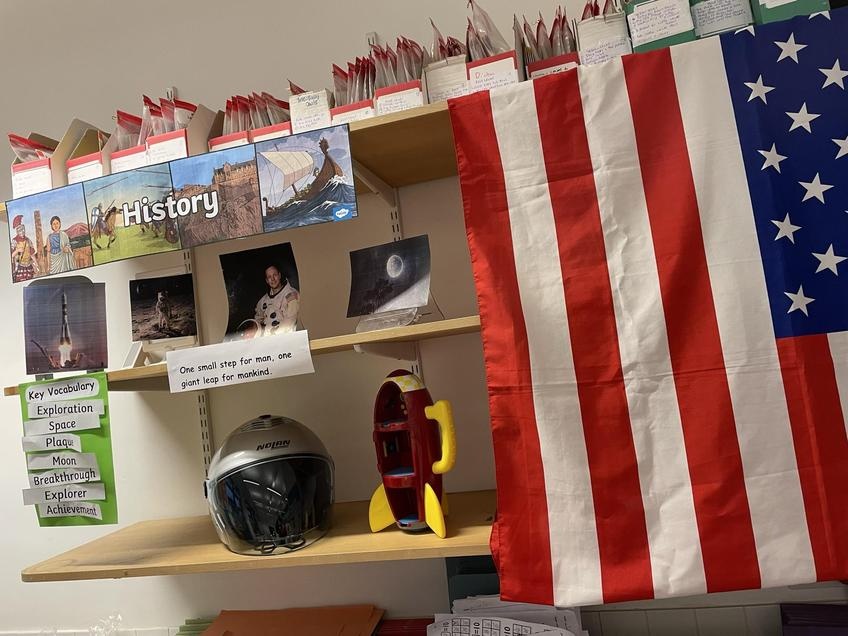
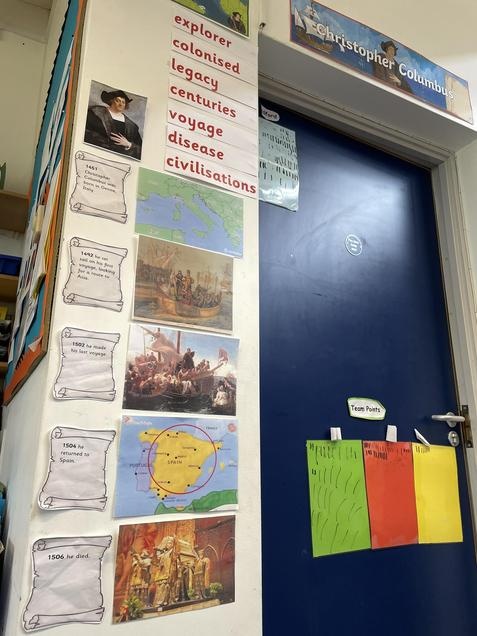
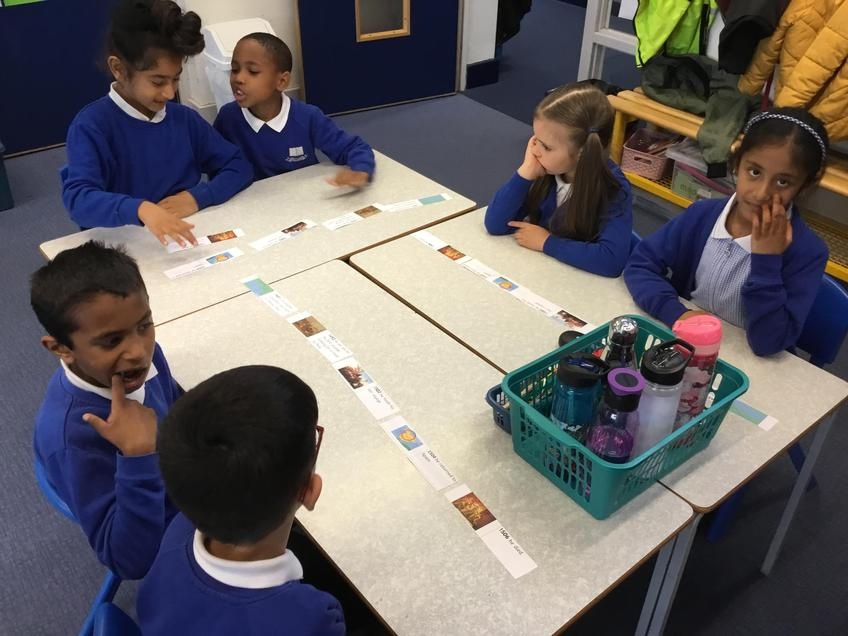
As a school we have built in studies of significant individuals from the past across different cultures, recognising their contribution to national and international achievements as well as studying some significant culturally important events, ensuring that our history curriculum reflects the diversity of our wider community and builds our children’s cultural capital.
Vocabulary enrichment runs through our whole curriculum and history lessons provide an excellent opportunity to develop vocabulary that can be used in many other subject areas.
History Overview
History Intent
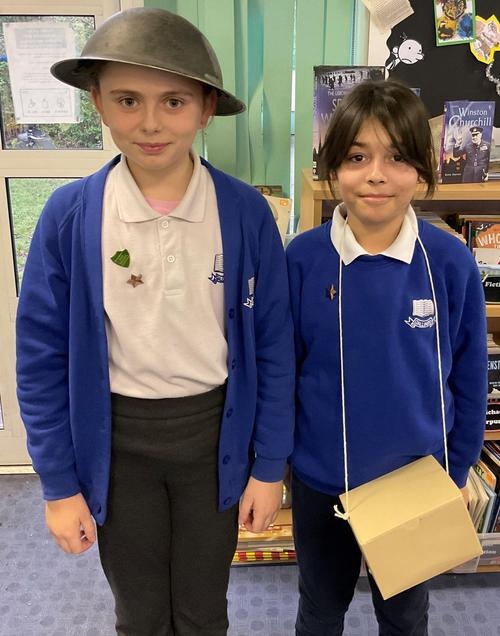
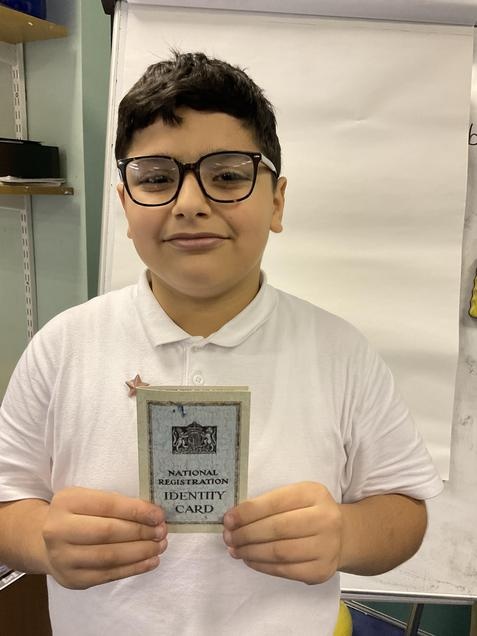
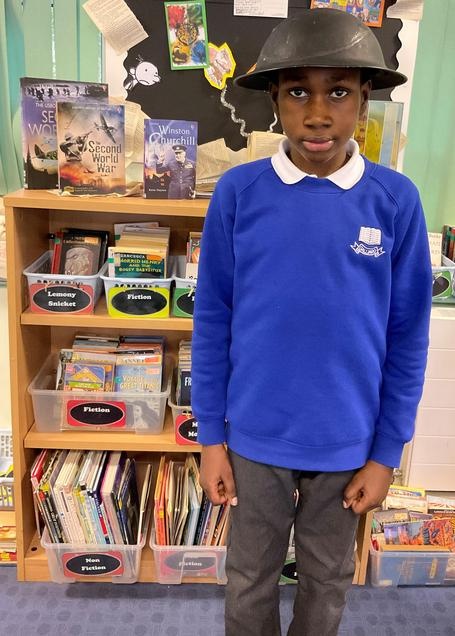
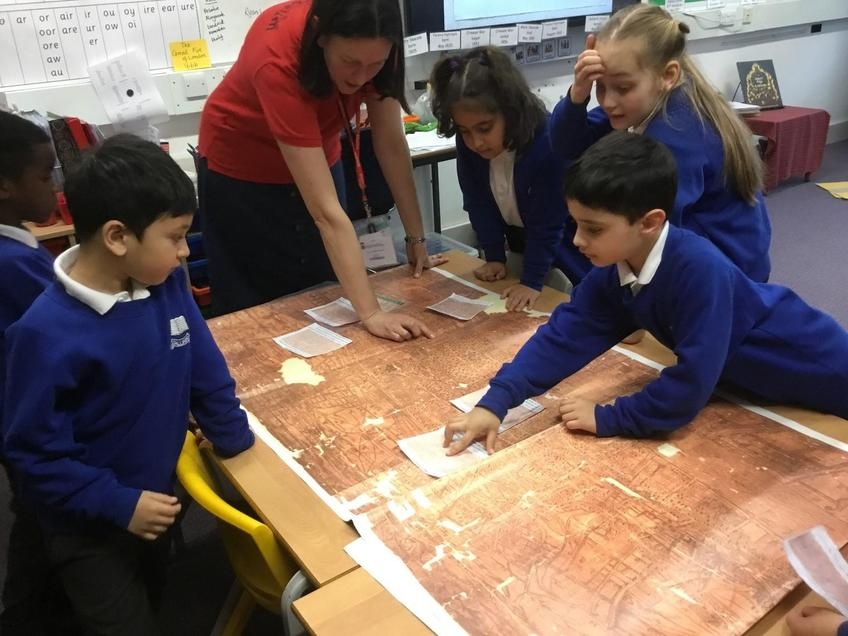
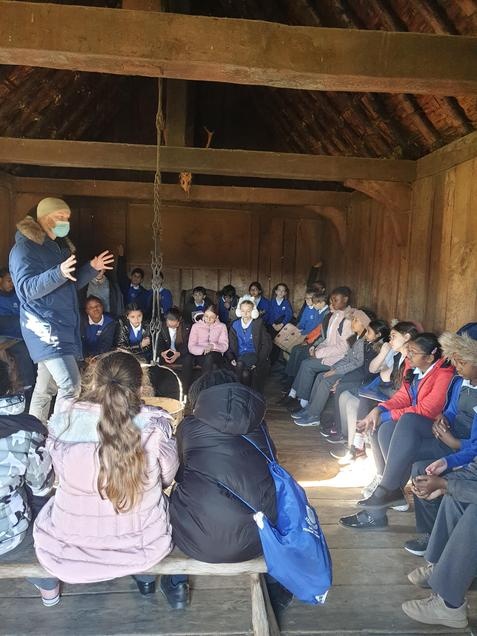
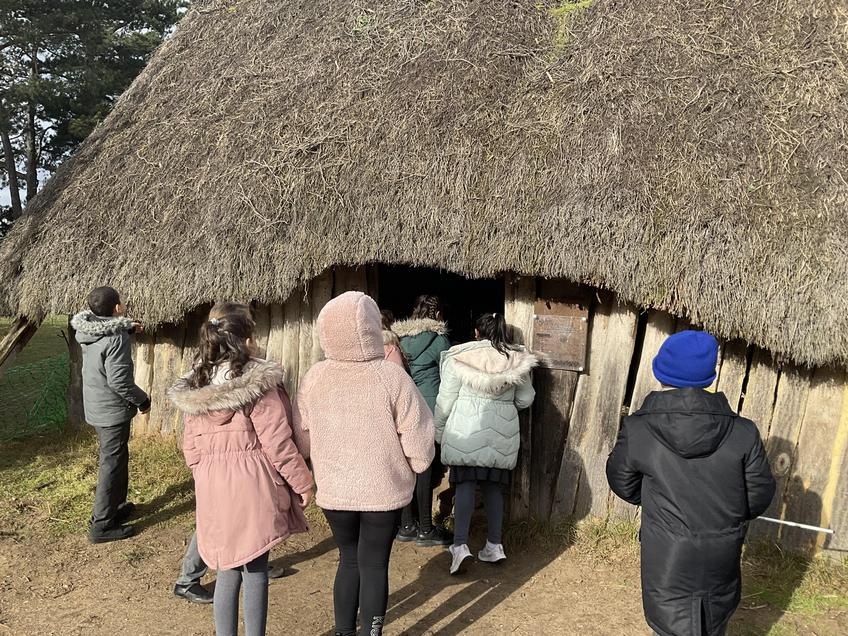
Year 6 Discover the Story of a Secret Listener!
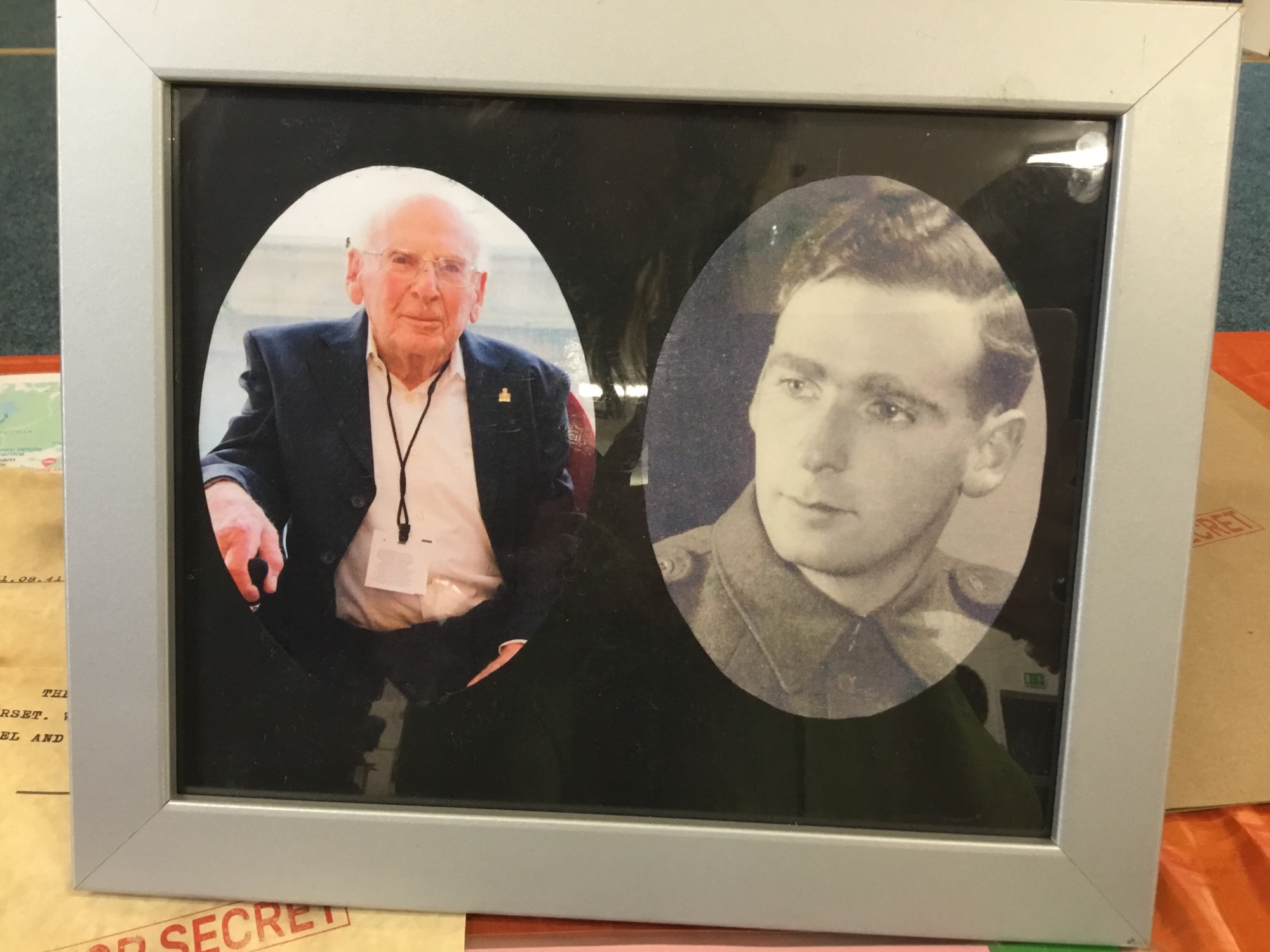
Last week, our Year 6 pupils took part in an exciting historical mystery that brought the fascinating story of the Secret Listeners of Trent Park to life. The immersive project was inspired by the real-life story of Eric Mark, a Secret Listener who worked at Trent Park during the Second World War.
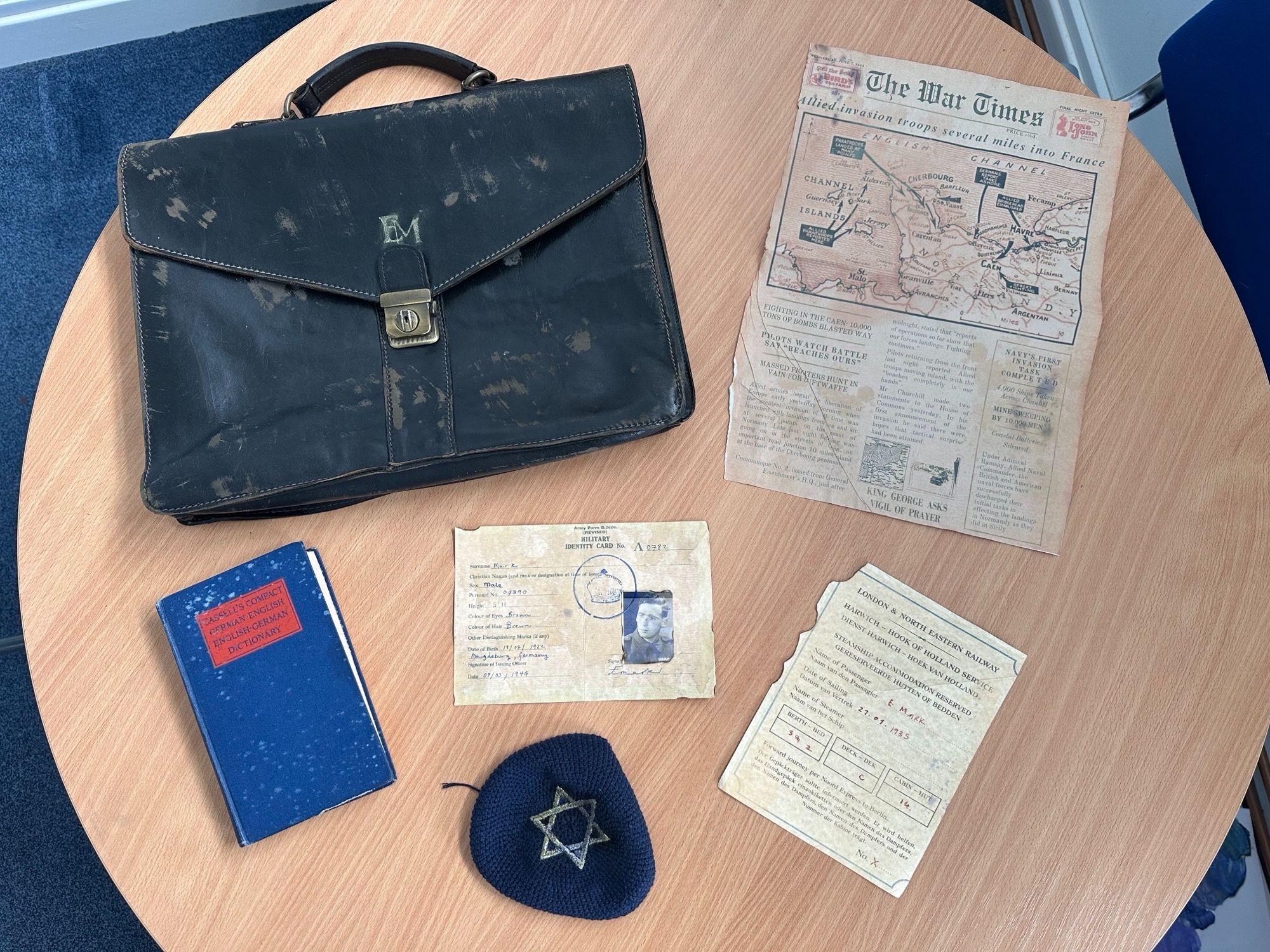
The adventure began when the children discovered a mysterious leather bag hidden amongst old lost property. Inside were several intriguing items, including a kippah with a Star of David, a Trent Park ID card with the name E. Mark, a WWII newspaper and a German-English dictionary. Working together as historians, the children carefully examined the clues and began to piece together the identity of the bag's owner.
They learned that the bag had belonged to Eric Mark, a German Jewish refugee who fled Nazi Germany and later worked at Trent Park as a Secret Listener, helping the Allied war effort during the Second World War.
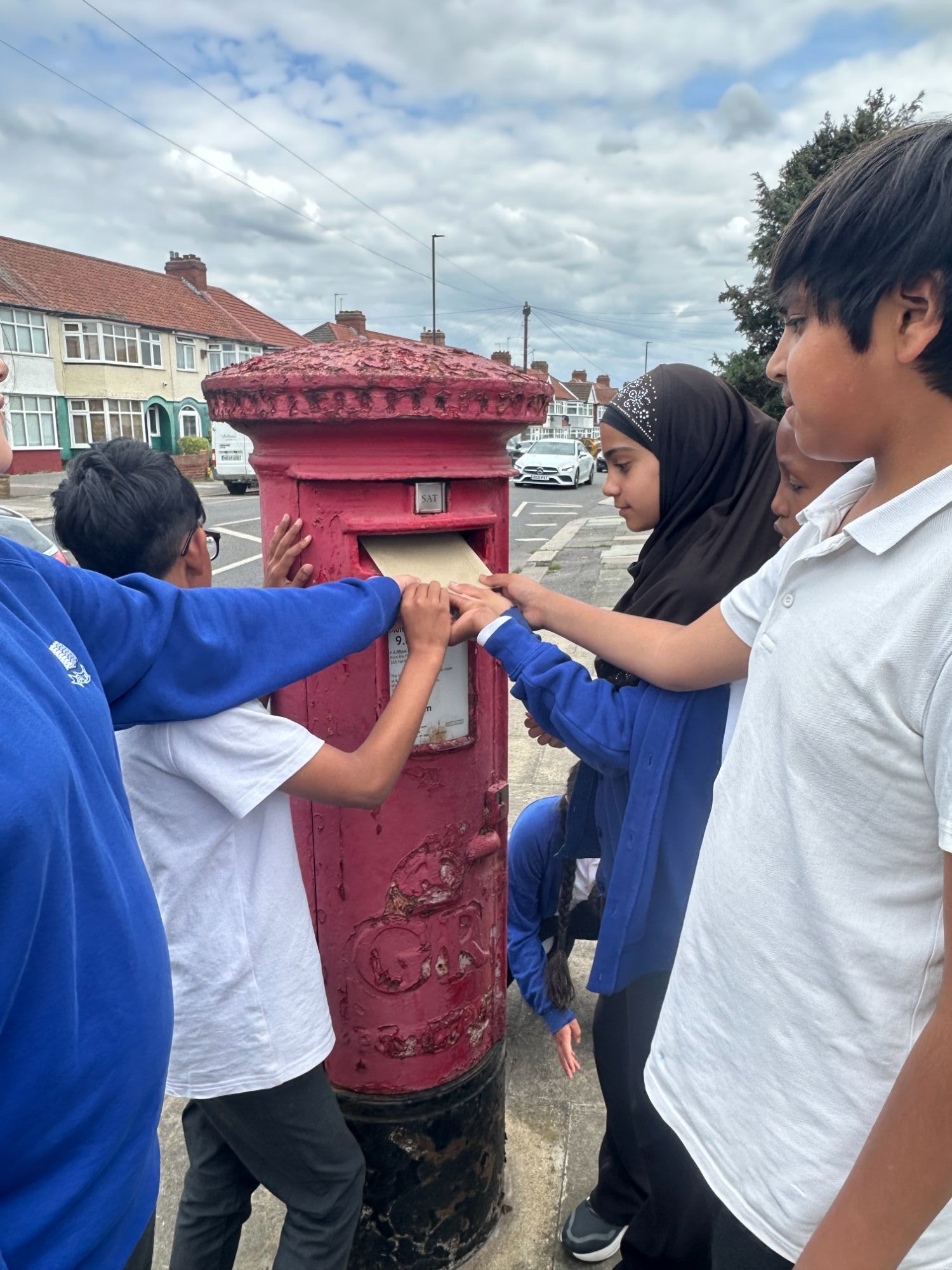
As part of the historical mystery, the children wrote thoughtful letters to Eric Mark's last known address in the hope of returning the bag to a member of his family. A few days later, they received an unexpected reply from his granddaughter, who explained that she was writing a book about her grandfather's life and was delighted that the children had discovered his lost bag. She asked if she could visit the school to learn more about the find.
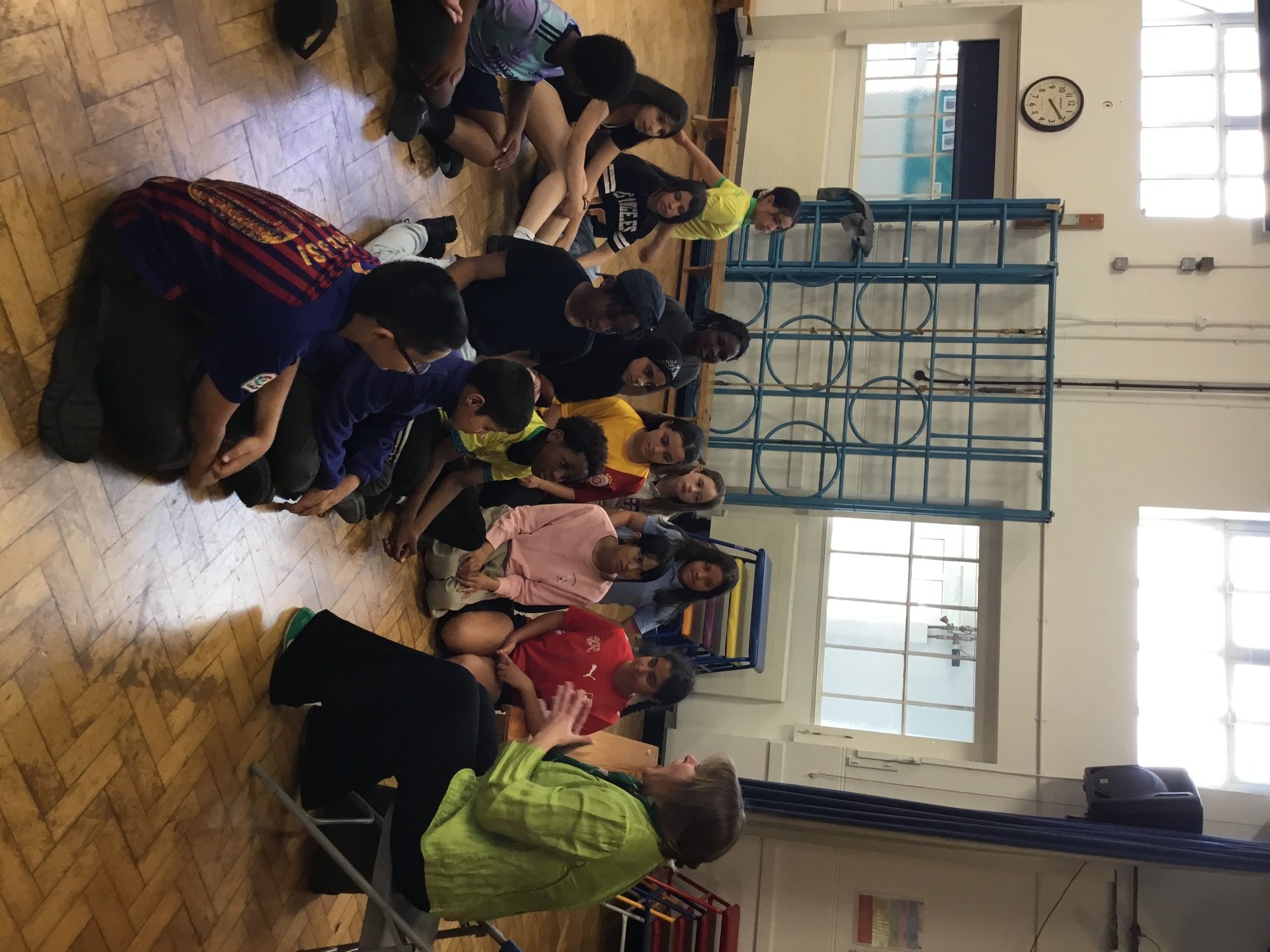
This led to an exciting workshop delivered by Freshwater Theatre Company. An actress took on the role of Eric Mark's granddaughter, bringing his story to life through an immersive drama experience. Through a range of engaging activities, the children learned all about the Secret Listeners who worked at Trent Park. They participated in spy-training challenges, created virtual presentations using freeze-frame drama techniques, listened to real diary extracts from Eric Mark and finished with a hot-seating activity in which they became Secret Listeners working in the basement of Trent Park.
The workshop helped the children develop a deeper understanding of local history and the experiences of refugees during the Second World War. As they uncovered clues and information step by step, their excitement and curiosity grew. This hands-on approach helped them connect with the real people and events behind the story, making history feel meaningful and memorable.
Our pupils thoroughly enjoyed the experience:
"I want to go and visit Trent Park House now!" – Jude, 6K
"It was a very unique experience because we were able to act like Secret Listeners and see the information first hand." – Judy, 6K
"It was very intriguing, like the suspense of waiting to find out what happens next. For example, waiting to see if we would get a response from the letter." – Milena, 6K
"It was fun because I like learning about this step by step instead of learning all at once in the classroom. First we found a bag and items from WW2, then we found out that the person was a Secret Listener, we wrote a letter to his last known address and then had the workshop because Miriam came to take the bag." – Emmi, 6K
A huge thank you to Trent Park House of Secrets and Freshwater Theatre Company for providing such a memorable and engaging learning experience. The workshop sparked curiosity, developed historical enquiry skills and brought an important chapter of local history vividly to life for our Year 6 pupils.
Historical Writing Achievement
Celebrating Eleya's Historical Writing Achievement
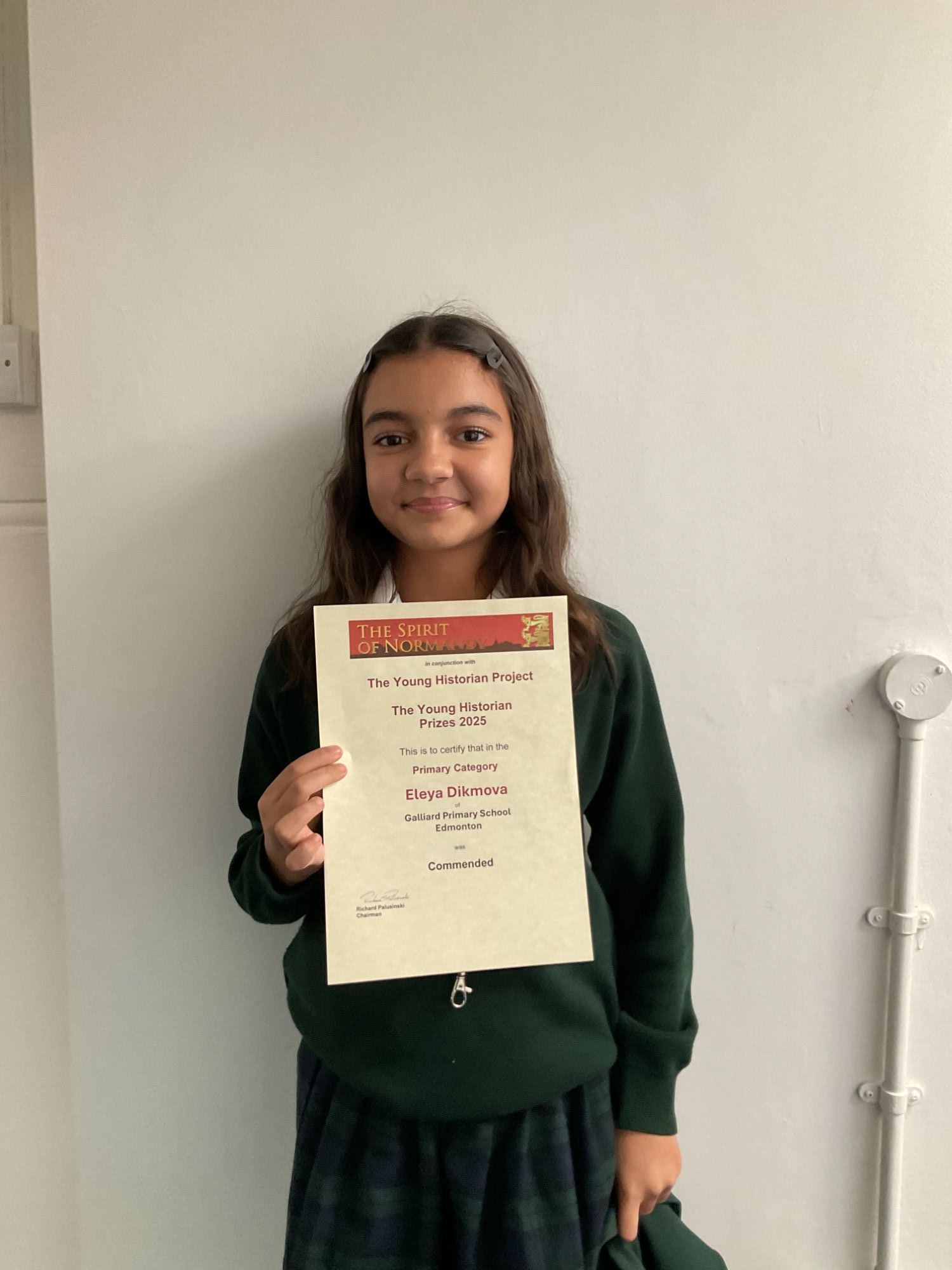
We are delighted to share that one of our past pupils, Eleya Dikmova, has been commended in the Primary category of the Young Historian Project 2025 for her outstanding piece of historical writing.
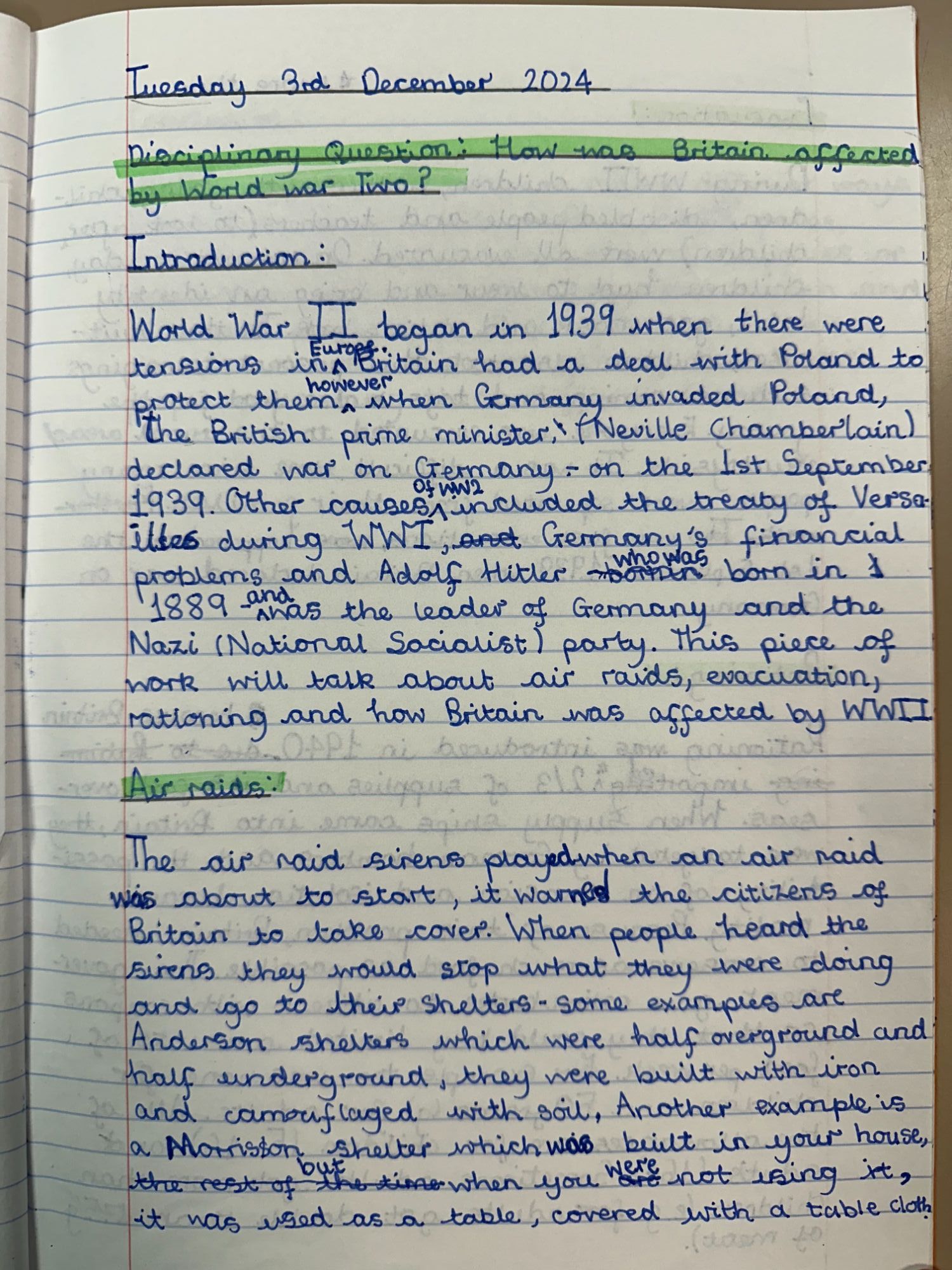
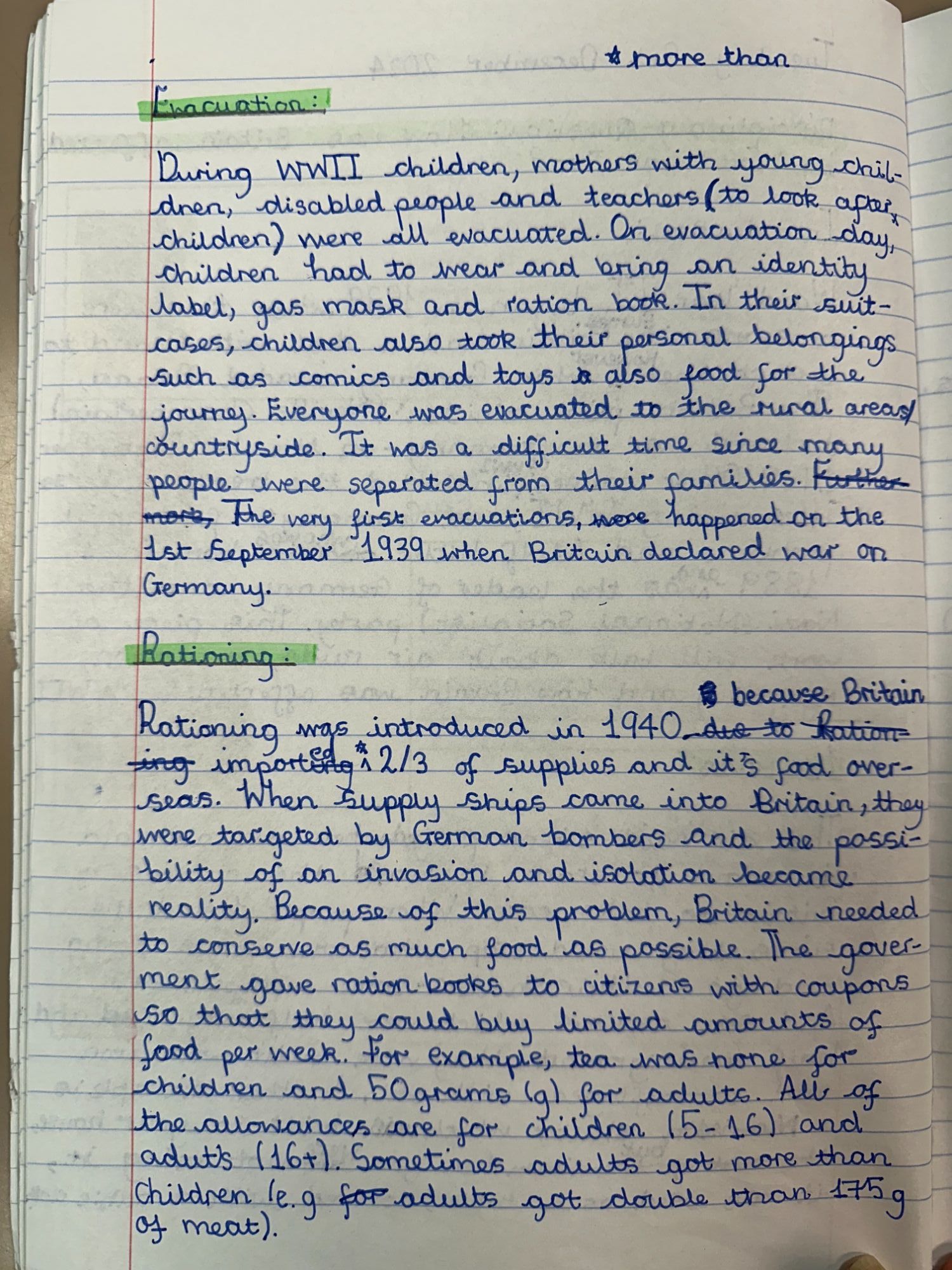
Eleya entered the national competition last year with an extended piece of writing titled "How was Britain affected by World War Two?" In her thoughtful and engaging piece of writing, she explored key aspects of wartime Britain, including evacuation, rationing, and air raids. Her work demonstrated a good understanding of the period and was recognised by the judges for being clearly presented and thoughtfully written.
In their message to the school, the organisers said:
"The entry from Eleya Dikmova to the Primary category of the Young Historian Project 2025 was judged as Commended. Please pass on our congratulations to her for her well-crafted project. The standard of entries this year was particularly high, which is encouraging. Thank you for all that you do to promote this competition and we look forward to further entries from Galliard Primary School in future years!"
Eleya received a certificate to mark her achievement, and we are incredibly proud of her success. It is wonderful to see our pupils' hard work and enthusiasm for history being recognised on a national level.
Congratulations, Eleya!

Year 2 Florence Nightingale Workshop
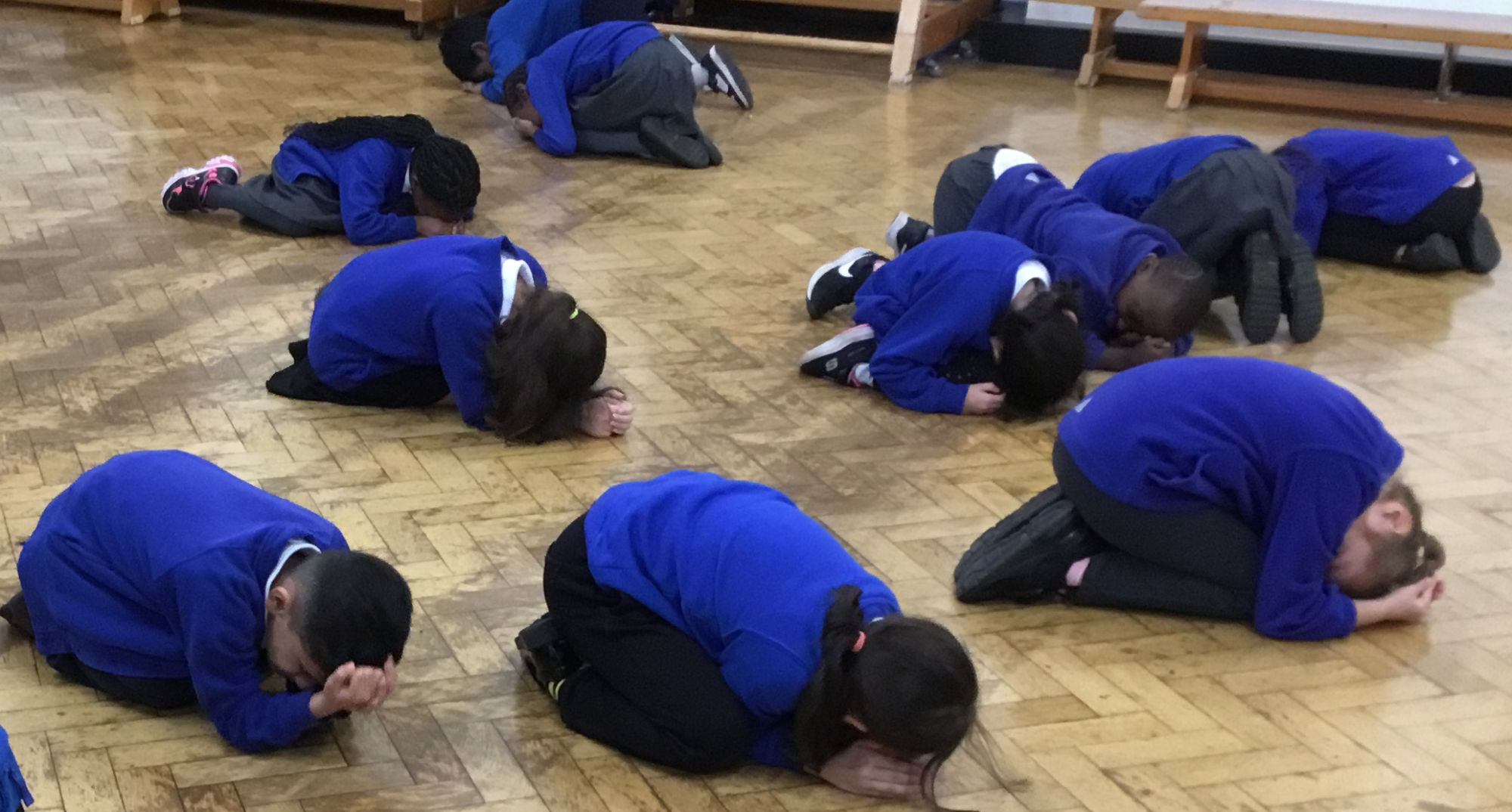
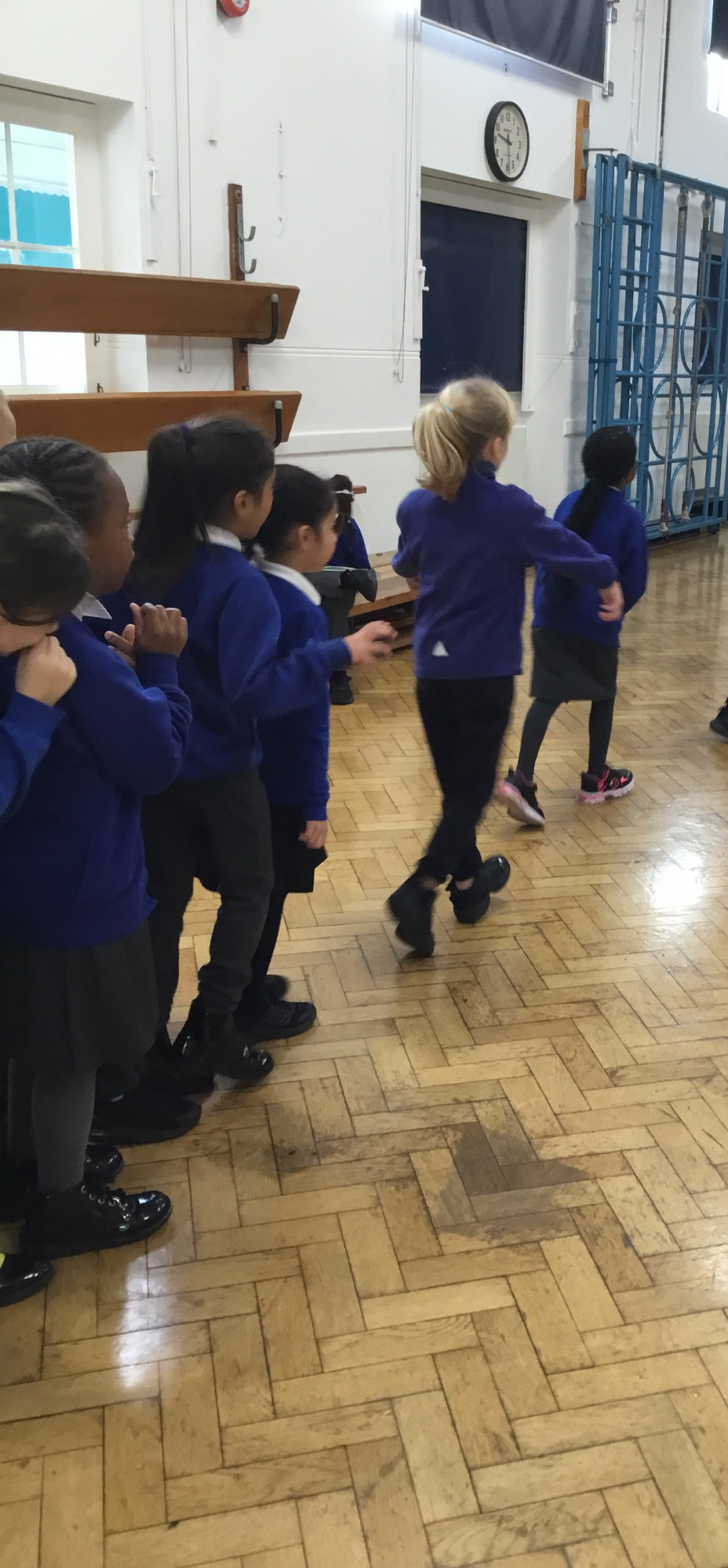
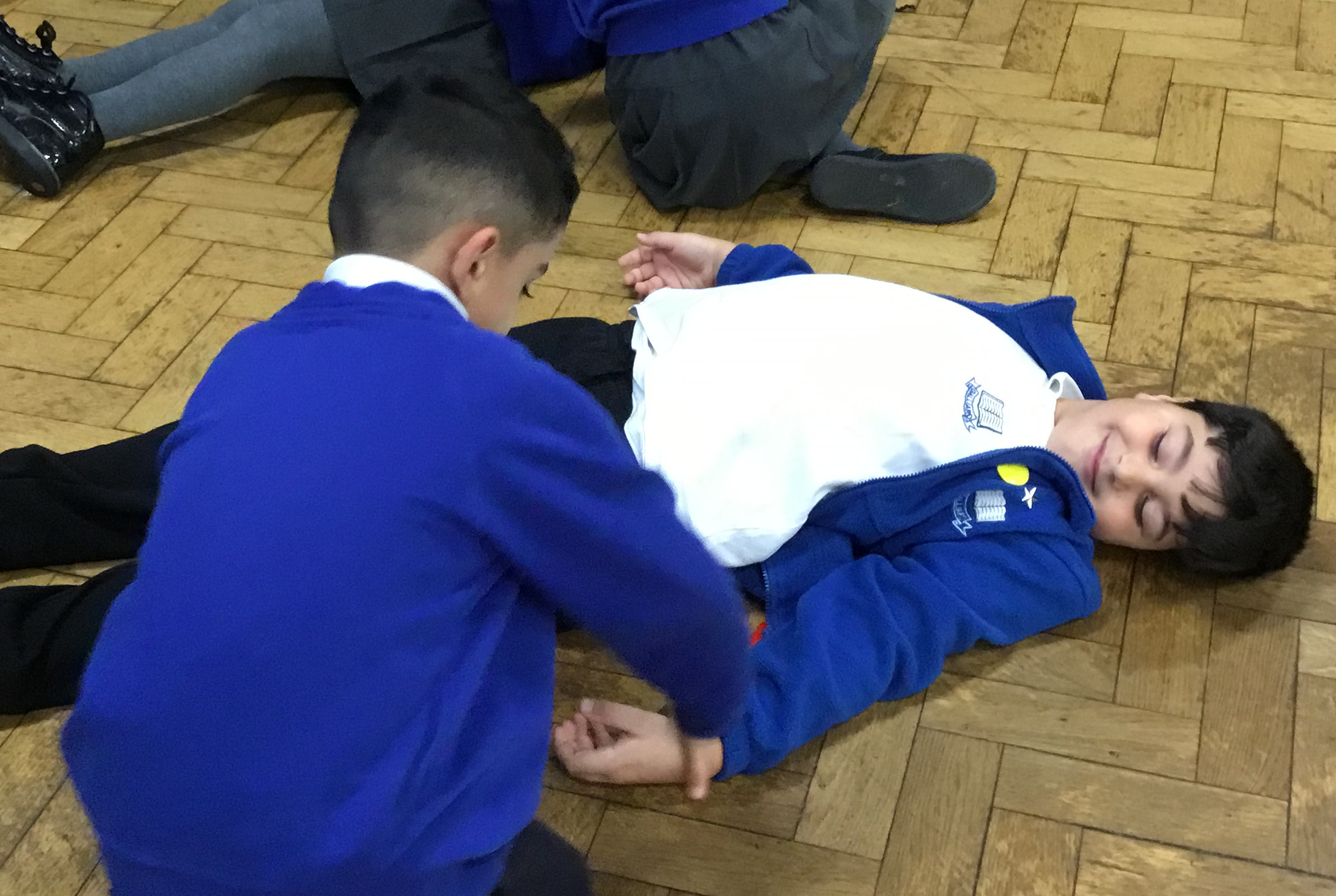
Year Two enjoyed a visit from Perform for Schools drama company, who provided an exciting drama workshop for the children where they learnt about the life of Florence Nightingale, and the positive changes she made to nursing and hospitals. Children took on a variety of roles, including soldiers, nurses, patients and ‘The Lady of the Lamp' , Florence Nightingale herself. The children thoroughly enjoyed themselves and had lots to say about the experience afterwards;
" I liked it when we cleaned the wards."
" I liked pretending to be an injured soldier."
"I liked when we time travelled."
" I want to be a nurse when I grow up."

Black History Month 2025
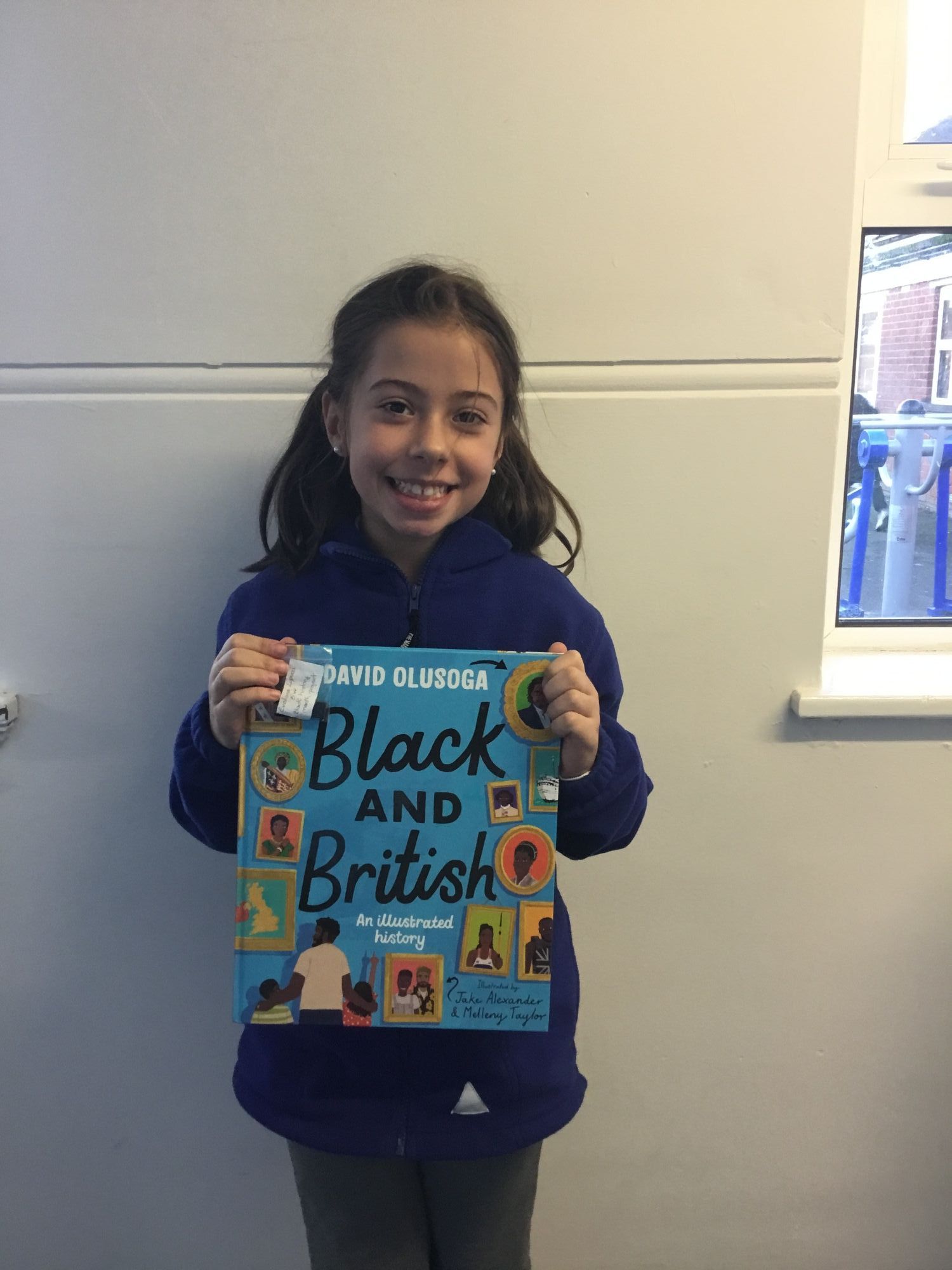
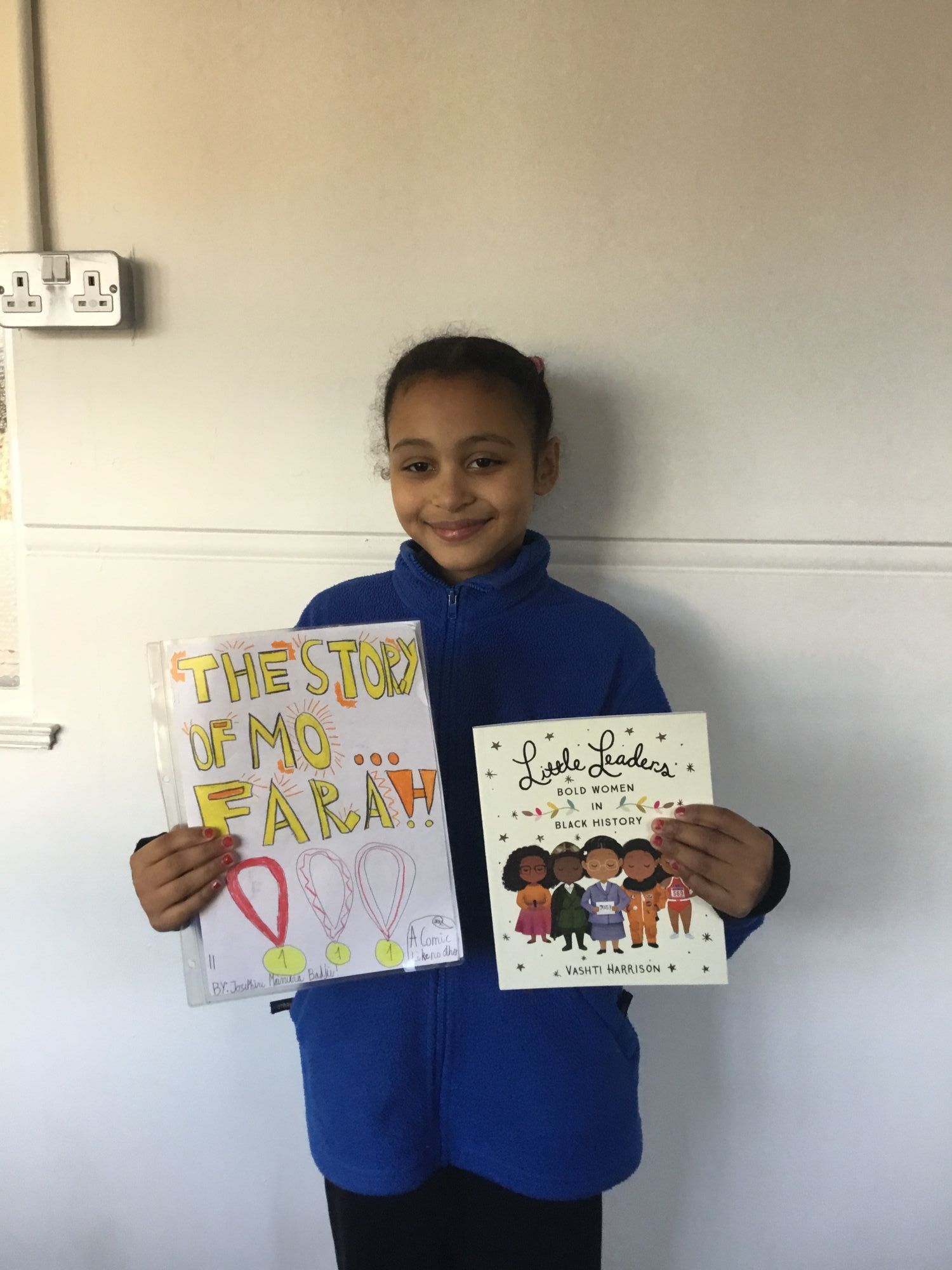
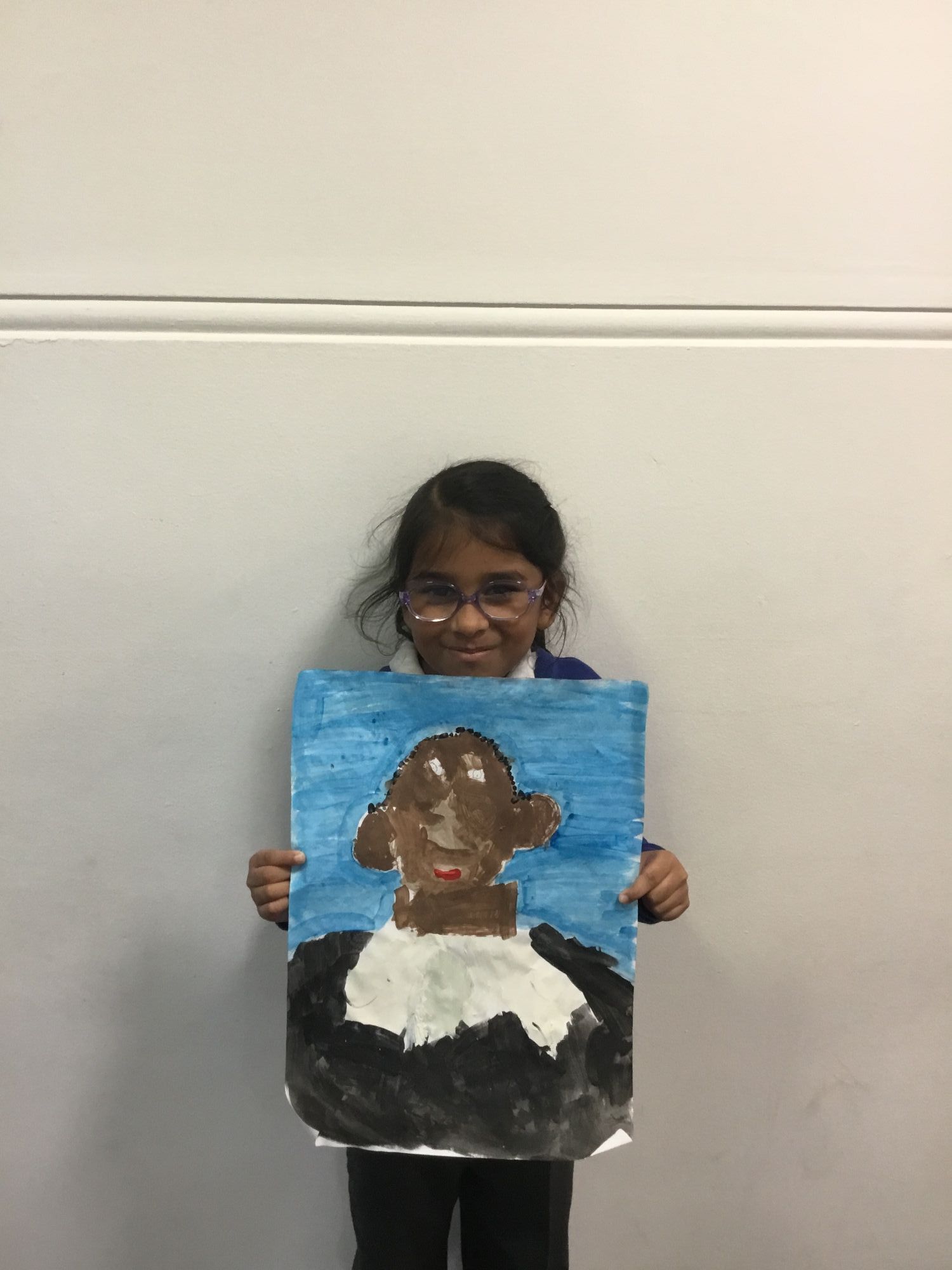
Congratulations to our Black History Month competition winners who showcased outstanding creativity and effort in their research projects for Black History Month.
WW2 Propaganda Webinar
Year 6 Explore World War Two Propaganda in a Live National Archives Workshop
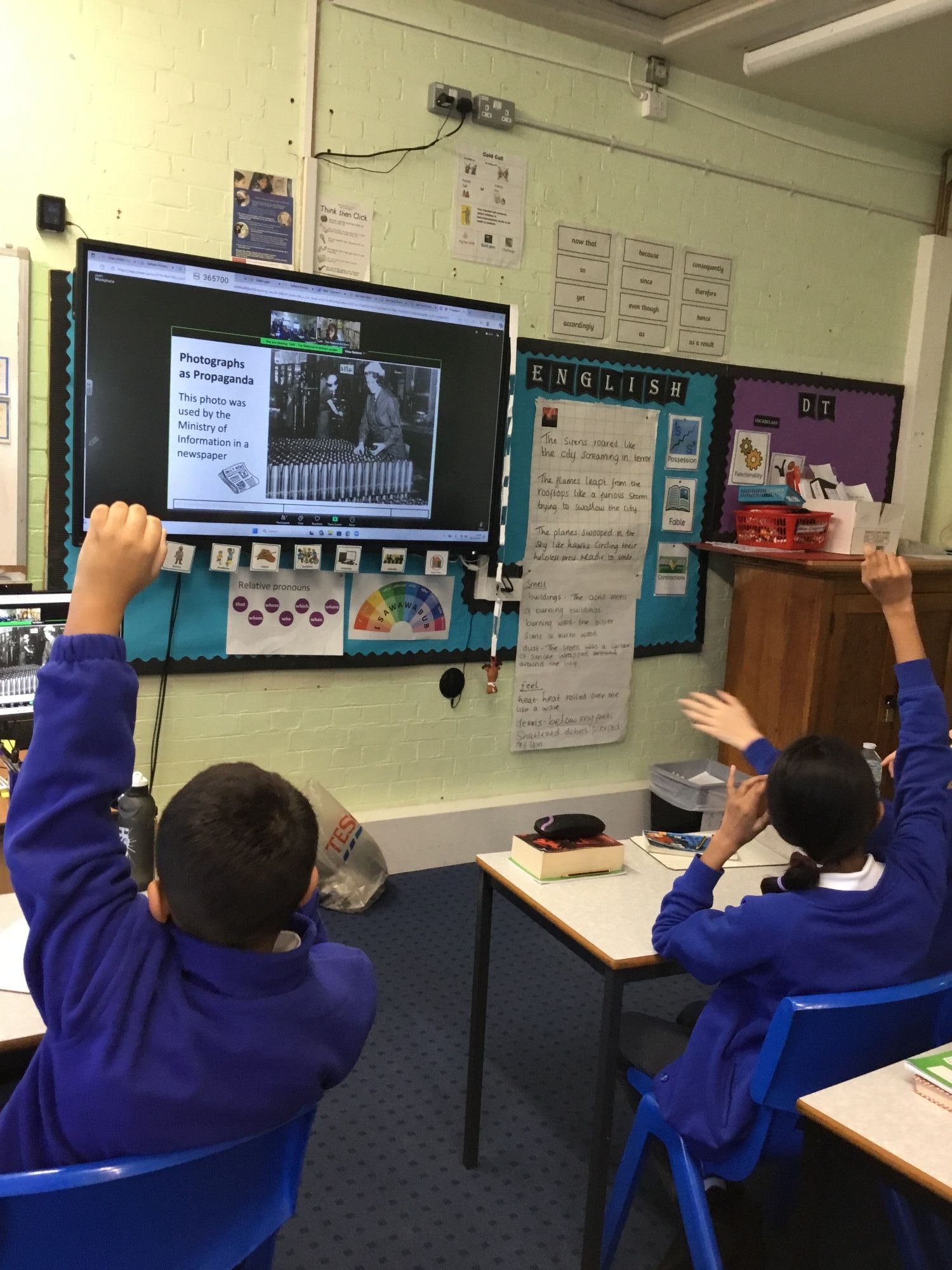
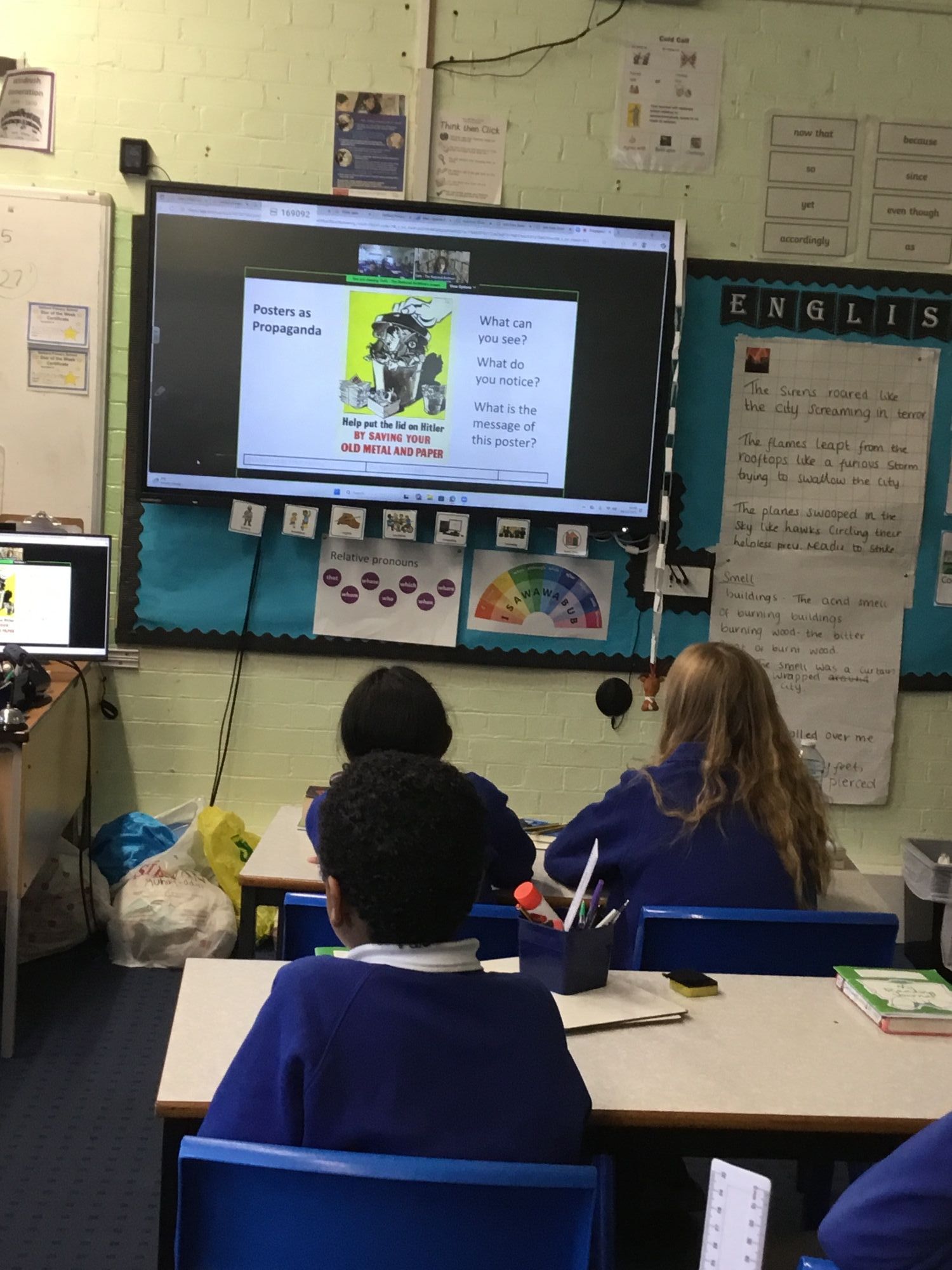
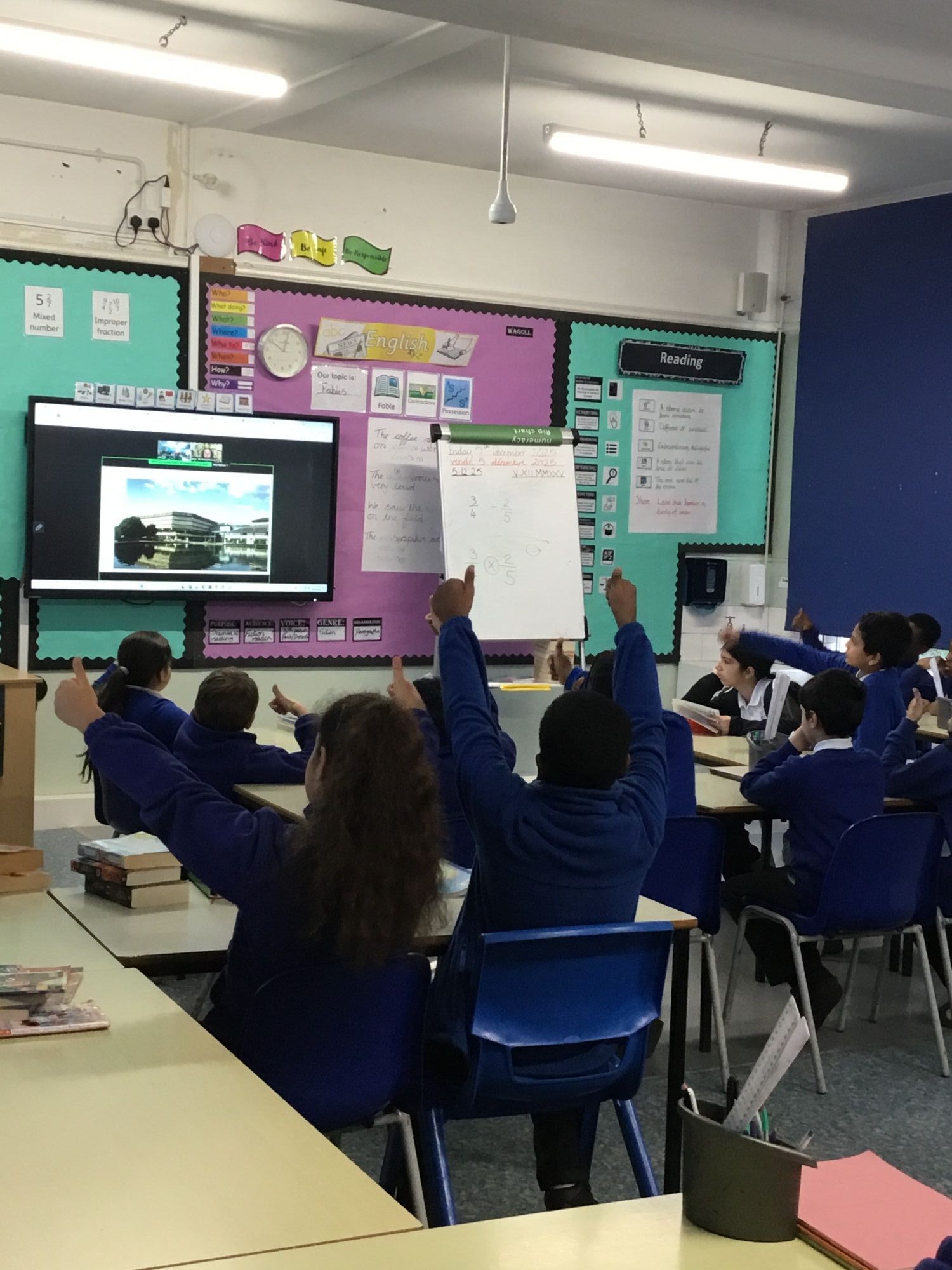
Year 6 were lucky enough to become real historians this week as they took part in a fascinating live online session delivered by experts from The National Archives. During the lesson, pupils explored a range of primary sources and discovered how historians use evidence to learn about the past.
The children were amazed to learn that The National Archives holds over 16 million boxes of documents, with new discoveries still being made today. They even saw one of the oldest documents in the collection – the Domesday Book, written in 1085 on sheepskin using a quill pen!
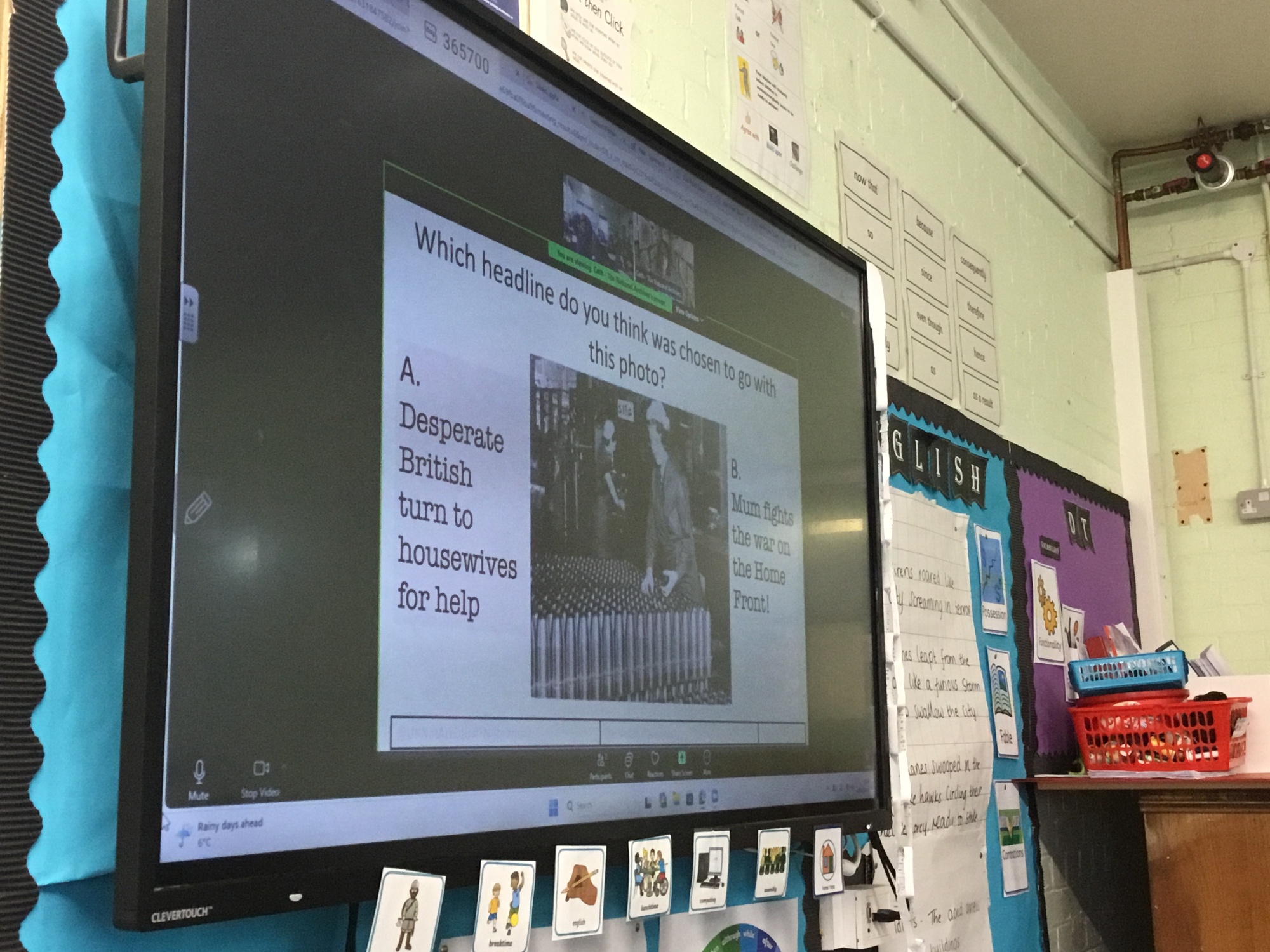
As part of their World War Two topic, pupils investigated how the Ministry of Information used propaganda to persuade people to support the war effort. They studied posters, photographs and film clips and discussed which types they felt were the most effective and why.
The session also helped Year 6 think critically about how images can be interpreted. They examined wartime photographs and learned how the same picture was published with different headlines in Britain and Germany to give it completely different meanings. Inspired by this, half the class wrote their own “British” headline for a photo while the other half created a contrasting “German” one.
The workshop really sparked the children’s curiosity, prompting thoughtful questions such as Jude’s (6K):
“When Britain won the war, how did they recover from rationing?”
The presenter explained that rationing actually continued for nine years after the war, which the class found surprising!
The children were full of enthusiasm after the session:
-
“I was surprised about how many people were evacuated and how they came back so soon after because there were no bombings for a while.” – Fatima, 6K
-
“I've learnt lots of new information and couldn't believe how many boxes and documents there were in the building. It was so interesting to learn new things.” - Myles 6K
-
“It was so fascinating and we got to learn so many new things about the past. I know what propaganda is now.” – Scarlett, 6K
This was a wonderful opportunity that deepened Year 6’s understanding of World War Two and the work of historians. A huge thank you to The National Archives for bringing history to life!